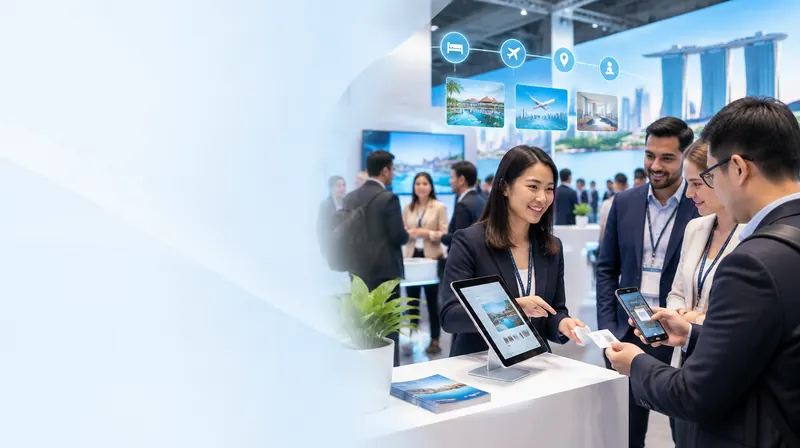
Treat the event as a listening post
For B2B marketers, the event is a place to test assumptions against real conversations.
Travel Tech Asia focuses on travel technology and is co-located with ITB Asia and MICE Show Asia. That combination matters: technology suppliers share the venue with the hotels, travel sellers and meetings and events specialists who actually buy and use their products. For a travel tech marketing team, it is a chance to hear how buyers describe their operational problems in their own words.
Travel buyers rarely judge technology on features alone. They care about how quickly it connects to their existing systems and channels, what it does for revenue and the guest or traveller experience, and whether the vendor can support them across markets. Noticing which of these concerns comes up first, and which claims visitors doubt, helps you refine positioning with evidence rather than internal assumptions.
Questions worth listening for at Travel Tech Asia
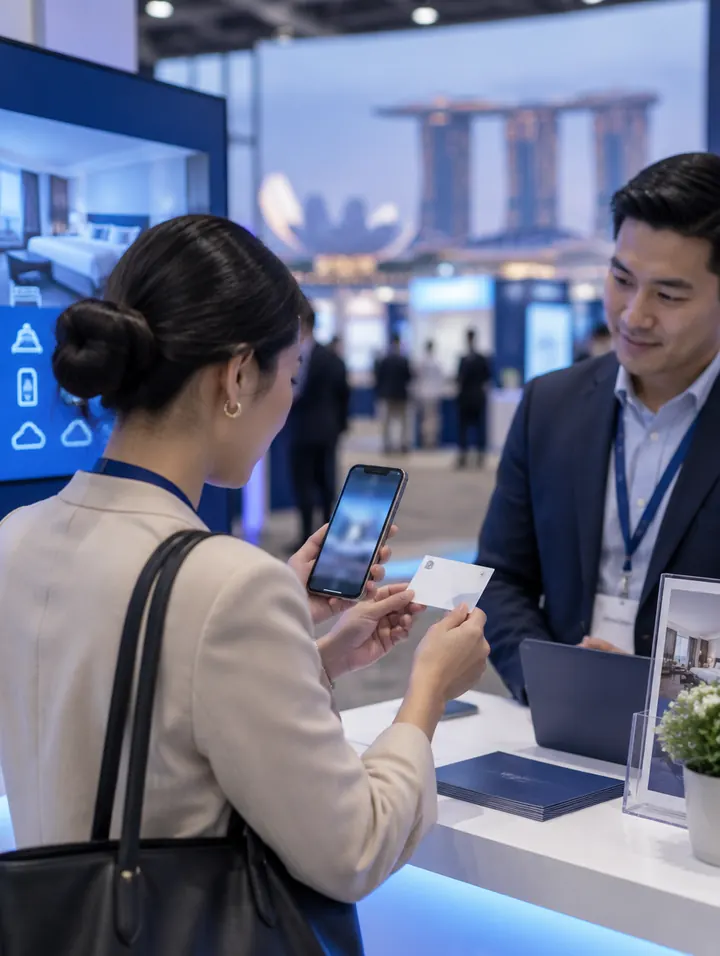
Give your team a short list of themes and ask them to note when visitors raise them unprompted. The questions buyers ask reveal more than the answers your team already knows how to give.
- How does this connect with our property management, booking and distribution systems?
- What will it do for direct bookings, pricing or revenue, and how will we measure that?
- How does it improve the guest or traveller journey, and what data does it rely on?
- Can it handle the needs of corporate travel, MICE groups and leisure customers alike?
- How long does implementation take, and what local support and training come with it?
Turn observations into useful marketing
Before arriving, decide which people and questions matter most. During the show, listen for repeated needs and the language buyers use. Afterward, turn those observations into content, sales enablement and a more focused event plan.
Before the show
Choose the buyer groups that matter most, such as hotel groups, online and offline travel sellers or MICE organisers, and the assumptions you want to test with each. Because ITB Asia and MICE Show Asia run alongside, plan which audiences you will seek out where, and book key meetings in advance.
At the show
Ask about the visitor's current systems and pain points before demonstrating anything. At the end of each day, compare notes as a team: recurring objections, phrases buyers used and integration questions that kept coming up.
After the show
Turn what you heard into specific assets: integration explainers, use cases framed by buyer type and updated talking points for sales. Share a summary with sales and product while the conversations are still fresh.
Capture business cards without losing the context
After a busy day on the floor, cards pile up in pockets, handwritten notes become hard to read and photos of cards disappear among hundreds of other images on a phone. What gets lost most is the context of each conversation, and without it the follow-up becomes a generic email that rarely gets a reply.
Straight after the conversation, scan the card with CardToDeal in your phone's browser, with no app to install and no account to create.
Check the details the AI has extracted: name, company, job title, email and phone.
Jot down what was discussed and a priority for the contact in your phone's notes while it is fresh; you will add this to the exported data.
The same evening, export the contacts to CSV or Excel, or move them into your team's CRM, such as VynDeal.
Send follow-ups within the window agreed with sales, referring to the topic you discussed.
If your team wants to manage these contacts as pipeline rather than a forgotten spreadsheet, VynDeal helps you track the next step for each opportunity. With visitors from many markets, it also helps that CardToDeal reads cards in 40+ languages.
Make the next conversation count
A useful event report records what the team learned, which conversations deserve follow-up and what should change next time.
- The main lessons about buyer needs, objections and the language they use.
- Conversations that deserve follow-up, each with an owner, a priority and a next step.
- Assumptions that were confirmed or rejected, and what that means for positioning.
- Content and sales enablement ideas that came directly from conversations.
- What to change next time: target buyer groups, meeting plan, stand messaging and follow-up process.
To build a repeatable process from first meeting to closed deal, see how demand generation consulting can connect your events to pipeline.